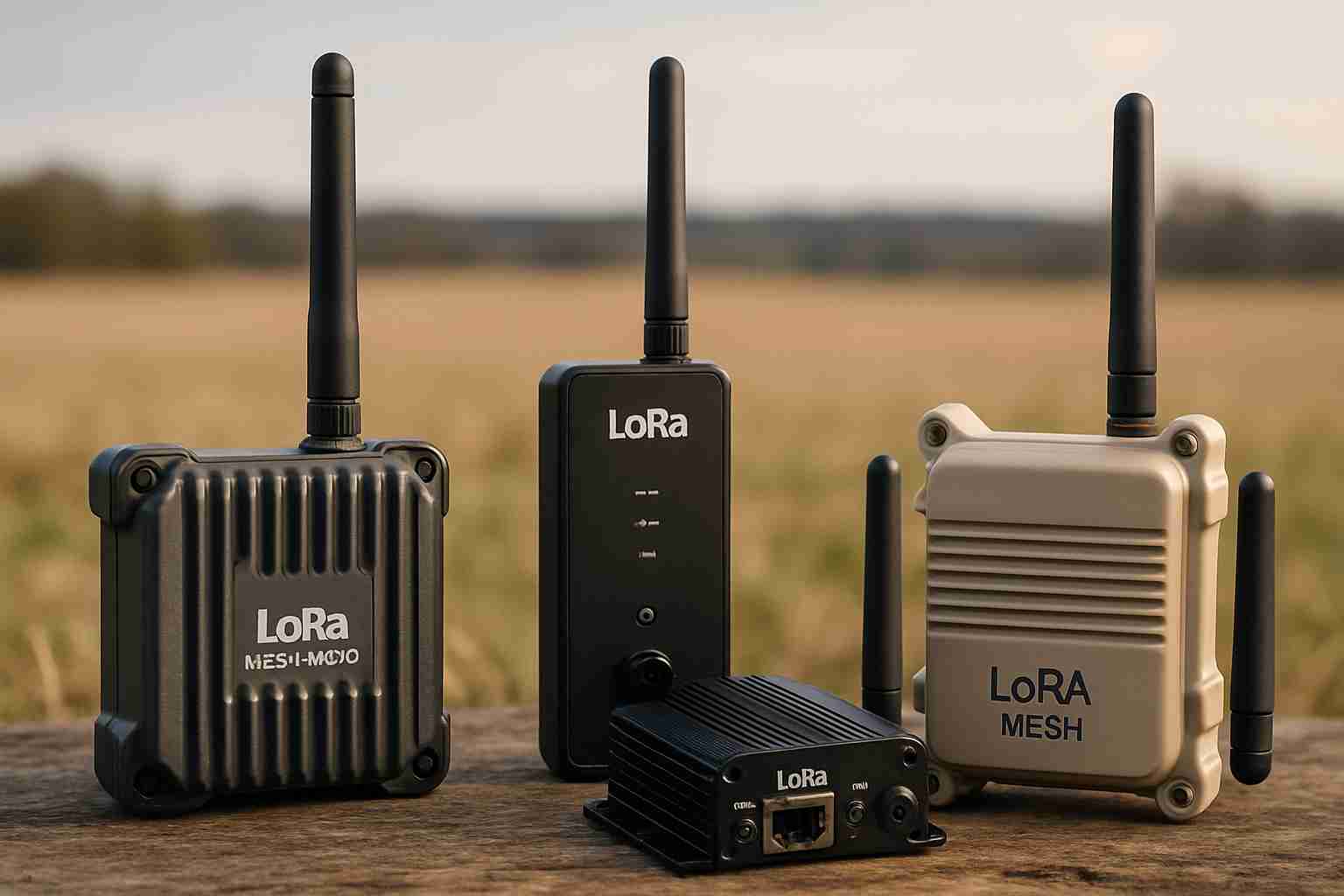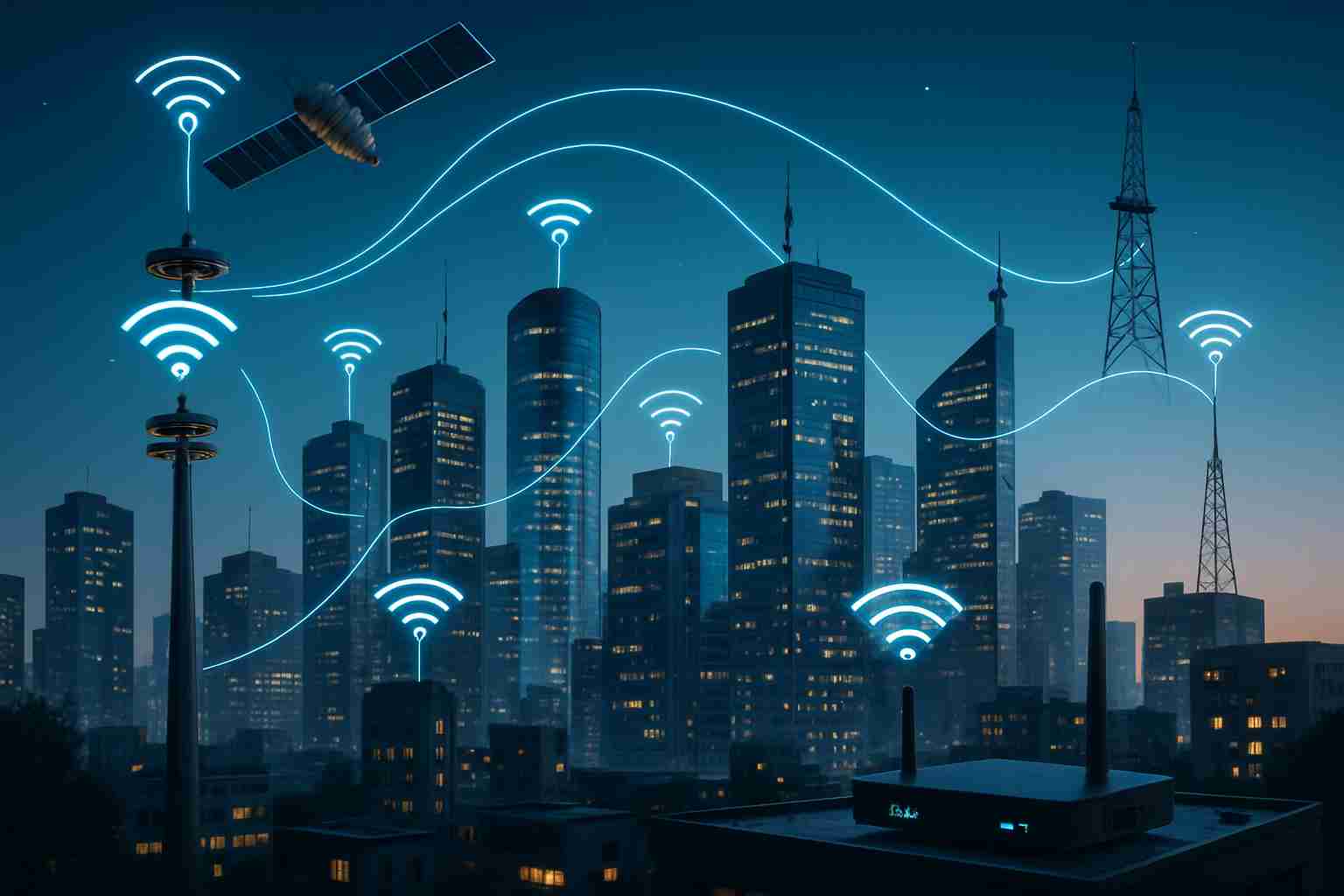




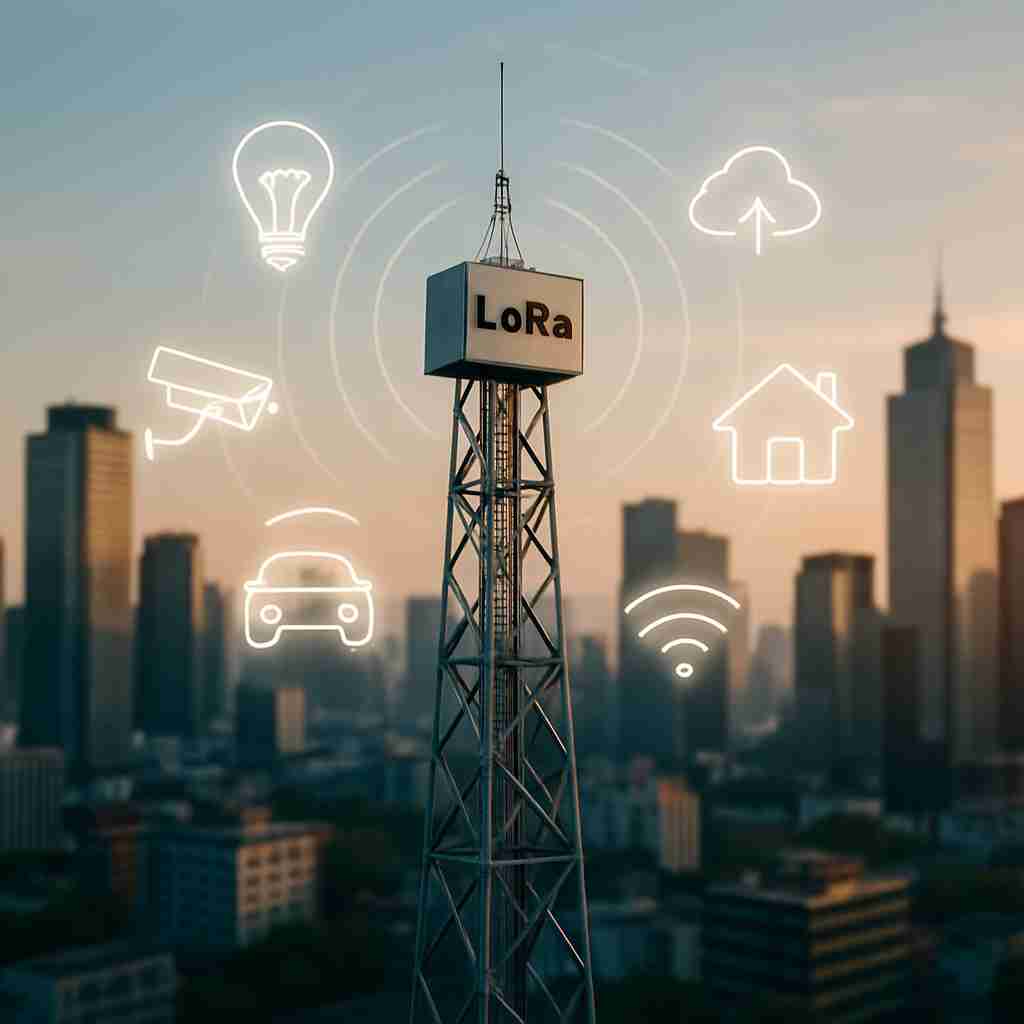
LoRa is a proprietary wireless communication protocol that has transformed the Internet of Things (IoT) ecosystem by supporting extended-range IoT connectivity over energy-efficient wide-area networks. By leveraging the capabilities of the LoRaWAN network technology, a diverse array of IoT implementations has developed, employing LoRaWAN gateway devices and their vast signal range for numerous industrial Internet of Things solutions.
LoRa Communication and its Unique Modulation Technology
LoRa communication, celebrated for its far-reaching IoT communication capabilities, employs a distinctive spread spectrum modulation to facilitate energy-efficient wide-area network connectivity. This modulation approach spreads the data signal over an expanded bandwidth, enhancing its robustness against noise and interference. As a result, signal strength is improved, enabling devices to connect across several kilometers while consuming very little power — a crucial benefit for IoT infrastructure designed to efficiently link numerous power-optimized IoT communication devices.
From a practical standpoint, this method supports reliable data exchange in scenarios where conserving energy is essential but communication integrity must remain intact. The advantages of spread spectrum communication guarantee steady connectivity even in tough conditions like dense urban areas or rural zones lined with heavy vegetation.
LoRa communication is utilized in a wide range of fields, spanning from smart agriculture to industrial IoT implementations. Its superiority over conventional protocols is clear in its economical nature and ability to accommodate countless devices with simpler infrastructure. This technology plays a vital role in expansive IoT ecosystems, delivering connectivity stability that is both scalable and sustainable.
Understanding LoRaWAN and its Role in the IoT Space
LoRaWAN serves as a dependable protocol layer that enhances LoRa communication, establishing a structure for efficient, extended-range IoT connectivity with minimal power consumption. This communication protocol plays a crucial role in advancing the Internet of Things (IoT) by facilitating energy-efficient Internet of Things sensor systems across broad areas. Thanks to its open standard design, LoRaWAN enables effortless integration with various IoT network integration solutions, fostering innovation and simplifying adoption for both developers and enterprises.
A major advantage of the LoRaWAN communication protocol is its scalability. It supports everything from compact setups to large-scale deployments, accommodating a wide array of devices to fulfill diverse industrial Internet of Things solutions. In addition, the architecture of LoRaWAN network technology prioritizes robust IoT data security by integrating encryption methods that ensure data protection and privacy—an essential aspect in today’s data-conscious environment.
Moreover, the flexibility of LoRaWAN IoT technology allows it to cater to numerous scenarios, ranging from intelligent irrigation solutions to maintenance of connected city infrastructure. Its capacity to create customizable network topologies enables smooth adaptation to varying conditions and operational needs. Leveraging these comprehensive features, LoRaWAN stands as a critical element within the IoT ecosystem, significantly boosting the capabilities and reach of LoRa communication solutions.
Applications of LoRa in the Internet of Things
The impressive impact of LoRa communication within the Internet of Things (IoT) is evident through its widespread uses in areas such as smart metering, agriculture, environmental data monitoring, and logistics. Picture a huge farm where sensors collect soil moisture information, transmitting tiny data packets across broad distances. This data improves irrigation management, helping to conserve water while boosting crop production. Likewise, in smart metering, LoRa communication enhances traditional meters by sending energy usage details from remote locations with very low power needs, supporting efficient energy monitoring and billing.
LoRa enables smooth environmental parameter observation by delivering vital information regarding air quality and weather to centralized platforms, encouraging proactive responses to environmental threats. In logistics, LoRa enhances supply chain clarity by tracking assets over large areas, detecting inefficiencies, and minimizing delays. Urban settings also gain from LoRa’s support for smart city infrastructure. From automating streetlights to streamlining waste management, the technology shapes cities into more sustainable and efficient living spaces. Moreover, infrastructure upkeep is revolutionized as LoRa assists with monitoring structural integrity, ensuring safety while lowering maintenance expenses.
Examining Low Power Wide Area Networks (LPWAN) and LoRa’s Role
Low-energy wide-area network (LPWAN) solutions facilitate extended-range IoT connectivity for devices that communicate sporadically and require prolonged battery endurance, a critical aspect within the IoT ecosystem. Among these options, LoRa communication distinguishes itself by offering an effective compromise between range, power consumption, and cost-efficiency. Utilizing sub-gigahertz wireless frequencies, LoRa allows devices to send small packets of data across distances spanning tens of kilometers, all while maintaining very low energy usage. This makes it an excellent fit for battery-powered IoT devices designed to operate for years without needing a replacement.
LPWAN technology’s affordability and efficiency are fundamental to IoT network integration in various industries, including agriculture, where long-distance IoT transmission with minimal power use is essential. Compared to alternatives like NB-IoT and Sigfox, LoRa provides flexible deployment options through both private and public networks, supporting scalable IoT solutions. While its data rates are relatively low, its advantages lie in far-reaching IoT communication and extended device battery life, making it perfect for vast, low-bandwidth IoT use cases. This capability fosters the growth of connected smart city infrastructure and supports remote locations by bridging coverage gaps that many other WAN technology solutions might fail to address.
LoRa Gateways and Signal Range: Bridging the Gap in IoT Networks
LoRa gateways act as the vital link connecting IoT devices to network servers, skillfully transforming LoRa communication into meaningful data. These gateways handle multiple channels concurrently, guaranteeing smooth operation and broad network availability. The importance of signal range here cannot be overstated; it enables gateways to span extensive geographic zones, adjusting to varied terrains.
The signal range varies and is influenced by elements such as frequency bands and environmental interference like structures or natural obstacles. It is crucial to grasp these factors. Strategically locating gateways is a fundamental tactic to reduce connectivity issues, making sure devices stay within effective range and function reliably.
By carefully planning gateway placement, coverage can be significantly improved, overcoming physical limitations of the terrain. Such thoughtful deployment suits the diverse landscapes that IoT networks must navigate. This placement approach effectively connects LoRa communication with wide-reaching and efficient implementation. Consequently, IoT ecosystems thrive, enabled by gateways that proficiently close communication gaps across vast distances, fostering innovation and enhancing connectivity growth within the IoT field.
Conclusions
LoRa and LoRaWAN technology present a groundbreaking method for IoT connectivity, providing resilient and energy-saving network options. These technologies facilitate extended-range IoT connectivity with minimal bandwidth demands, allowing for the effective rollout of IoT solutions across diverse industries. The deliberate LoRa gateway installation significantly improves signal coverage and promotes a connected ecosystem poised for future IoT technology advancements.