




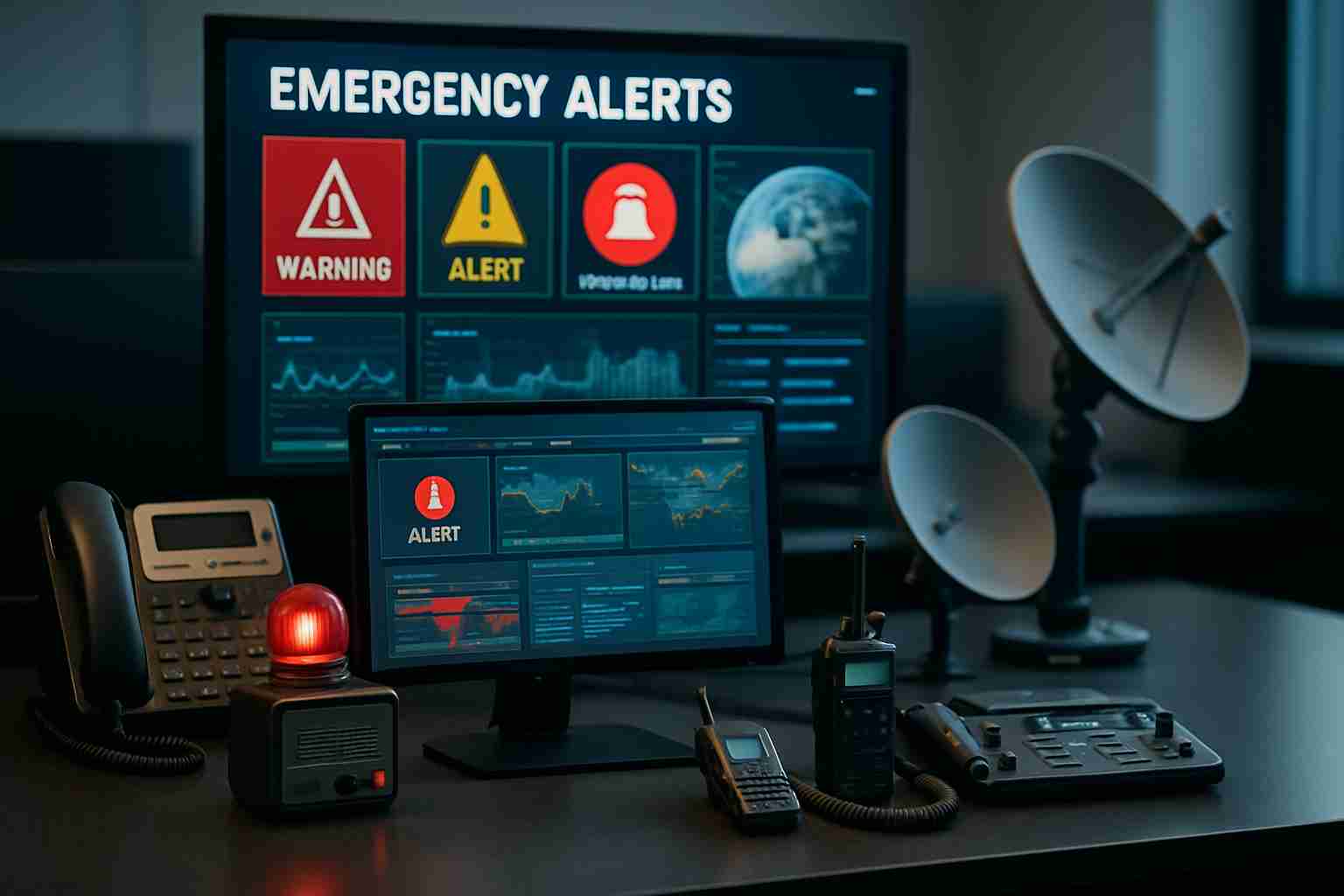
Delving into advances in crisis communication technology uncovers vital instruments for boosting public protection: emergency communication devices, notification platforms, and satellite crisis communication gadgets. Having a grasp of these breakthroughs enables us to prepare adequately and act swiftly during emergencies, protecting lives and assets through prompt warnings and resilient communication systems.
Emergency Communication Devices and Their Role in Crisis Management
Emergency communication devices are vital instruments for efficient crisis management, delivering essential connectivity precisely when it’s needed most. Designed to function in severe environments, these tools—including walkie-talkies, satellite phones, and disaster radios—guarantee that communication channels stay open even when traditional systems collapse. For example, walkie-talkies provide straightforward, short-distance communication without dependence on cellular networks. Their user-friendly nature and energy-efficient batteries make them perfect for quick deployment amid disorder.
Satellite phones extend connectivity further by enabling users to access global communication networks from the most isolated locations. By leveraging satellites, they sidestep terrestrial network outages, making them crucial for emergency responders operating in remote or disaster-stricken areas. In parallel, disaster radios disseminate vital updates without requiring electrical power, running on batteries or solar energy to keep communities informed during blackouts.
The robust construction of these devices ensures durability in tough situations, preserving their operation under strain. They exemplify dependable lifelines during hardship, helping to keep populations connected, educated, and calm when every moment is critical. Without emergency communication devices, orchestrated response efforts in emergencies would face major obstacles.
Understanding Emergency Notification Systems
Crisis notification platforms play a crucial role in safeguarding the public during emergencies by disseminating alerts across various media. Utilizing technologies such as automated crisis alerts and digital channels, these platforms ensure that timely warnings and directives are efficiently communicated. Unlike emergency communication devices, which are primarily designed for direct individual interactions, these systems emphasize broad communication. They connect with mobile networks to send location-based notifications to specific regions, making sure only the affected populations receive alerts. Additionally, public alert systems make use of sirens and outdoor speakers to reach those without access to mobile phones.
Digital signage can provide up-to-the-minute details that guide the public, helping to alleviate anxiety by offering straightforward, actionable guidance. While typically overseen by government agencies, private organizations and educational facilities also deploy these systems for customized alerts. Strategically positioned crisis notification platforms increase their effectiveness, guaranteeing that during a disaster, communities are kept well-informed through accessible communication. By leveraging these diverse technologies, emergency managers can quickly spread vital information, ultimately preserving lives and maintaining calm in chaotic situations.
Satellite Emergency Notification Devices in Remote Safety
Satellite emergency notification devices (SENDs) serve as a vital safety net for people located in isolated and remote regions. These emergency communication devices utilize GPS technology, linking with satellites to transmit distress alerts and exact location information to rescue teams. This swift data relay guarantees a prompt response, closing the wide distances separating explorers or workers from immediate assistance. Imagine being deep in the wild, far removed from city comforts; these durable tools ensure a lifeline remains accessible even in such isolation.
Recent developments have introduced two-way satellite communicators, enabling users to receive messages from rescuers and improving coordination during emergencies. Moreover, tracking devices for remote workers allow family and friends to follow an individual’s journey, providing an added sense of reassurance. The advancement of SENDs signifies not only technological innovation but also a dedicated focus on safety, making these emergency communication devices essential for those exploring nature’s most secluded areas. The careful blend of dependability and forward-thinking features makes these tools indispensable for safe ventures and efficient crisis management in the most remote conditions.
The Evolution and Integration of Emergency Response Communication
Over time, communication frameworks for emergency response have seen significant progress. From simple radio signals, they have transformed into interconnected, state-of-the-art disaster communication technology networks. These platforms now facilitate instantaneous data exchange between first responders, governmental bodies, and the general populace — a key factor in efficient crisis management. By incorporating sophisticated emergency response communication tools, responses become more agile and capable of adjusting promptly to the shifting nature of emergencies.
During unfolding incidents, emergency communication devices deliver rapid data transmission. This seamless, real-time information flow guarantees that critical updates reach the right individuals, enabling coordinated collaboration across multiple agencies. The NIMS implementation framework is integral to this, effectively closing communication gaps especially in large-scale emergencies, so every stakeholder remains in sync.
Such innovations simplify crisis handling and boost protection for all parties. The advancement of these communication networks highlights the vital role of pioneering technology to uphold transparent communication channels. As technology advances and emergency challenges grow more intricate, adapting quickly and sustaining effective coordination is absolutely crucial.
Developing Robust Emergency Communication Equipment for Future Challenges
As communities encounter a growing variety of risks, the need for sturdy emergency communication devices intensifies. The latest innovations have greatly enhanced the flexibility and toughness of these gadgets. Instantaneous data transmission now plays a crucial role, enabling information to be shared immediately during emergencies. Devices designed with superior durability endure extreme conditions, guaranteeing functionality even in challenging environments. Equally important is quick deployment; establishing a dependable communication network promptly can be the difference between saving lives and losing them.
Research and development efforts continue with the goal of equipping communication networks to face forthcoming emergencies. Focusing on flexibility allows these systems to adapt to new threats as they arise. Scalable communication infrastructures are essential, facilitating network growth effortlessly when necessary. By improving user interfaces to be more intuitive, even those without specialized training can operate these complex platforms, thereby continuously improving public safety.
With technological progress, these tools are evolving into more sophisticated and indispensable elements of crisis management. Whether coordinating emergency responses or delivering timely public information, such systems revolutionize our approach to handling disasters. This advancement in emergency communication devices ushers in a new chapter in public safety, shaping smarter, more agile responses to modern-day challenges.
Conclusions
Ensuring communities stay alert and responsive in times of crisis depends on the integration of effective emergency communication frameworks. Our capacity to safeguard lives and assets is strengthened by advancements in critical communication infrastructure, equipment, and devices. Facing future obstacles requires ongoing innovation and flexibility in crisis communication systems, which remain a crucial component of successful crisis management approaches.