




In an era where staying connected is essential but not always feasible, it becomes crucial to investigate alternative communication methods. Off-grid LoRa mesh networks present a compelling answer for eco-friendly communication systems that operate without relying on conventional infrastructure. This article explores how these distributed communication architectures work and the advantages they bring, emphasizing their revolutionary role in reshaping communication worldwide.
Understanding Off-Grid LoRa Mesh Networks
Off-grid LoRa mesh networks mark a significant leap in communication innovation, delivering dependable connectivity that operates without dependence on conventional infrastructure. Powered by LoRa, or Long Range Radio, these systems enable devices to exchange information over vast distances while consuming very little power. Functioning independently from established power and data frameworks, these standalone communication services prove essential in isolated or crisis situations.
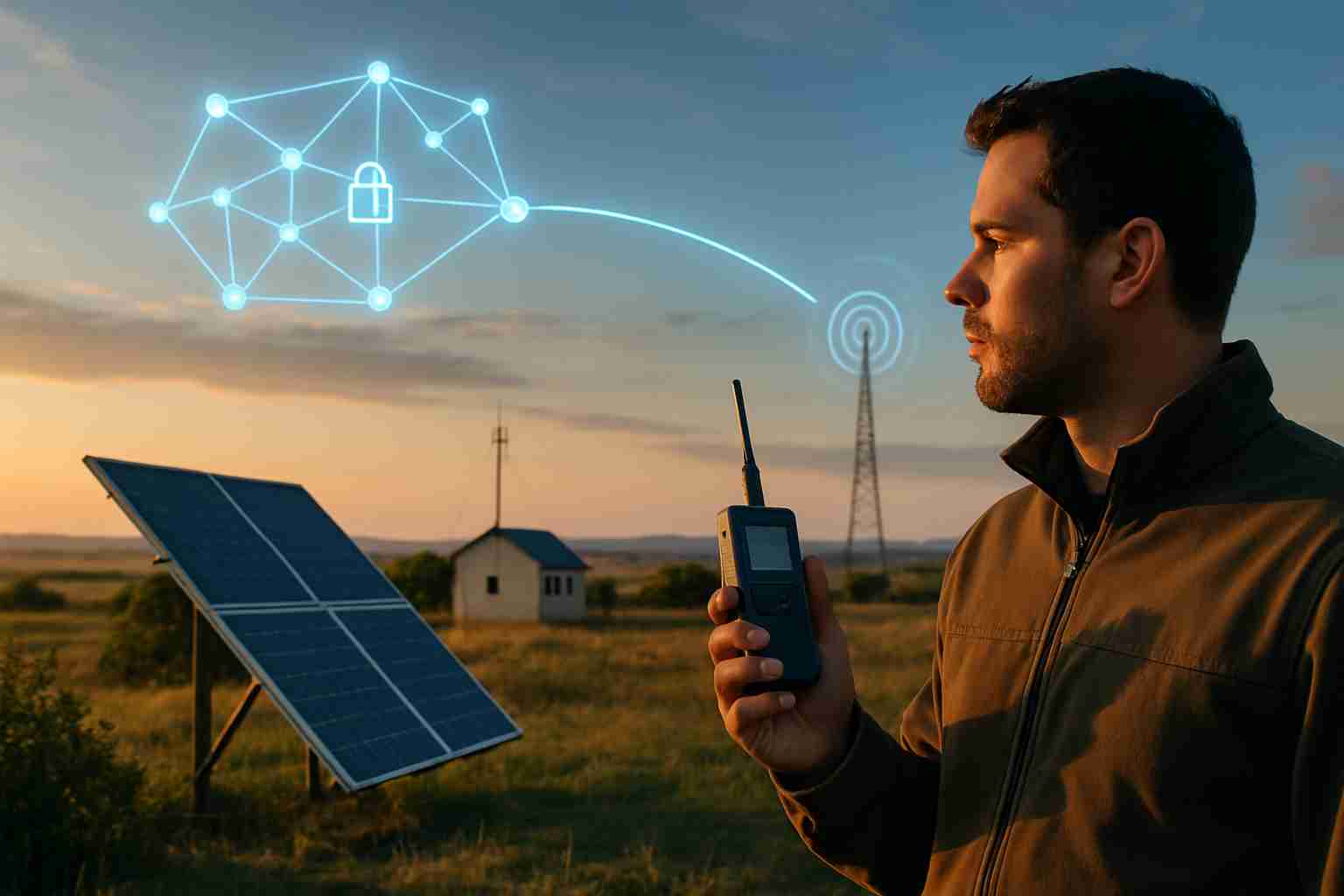
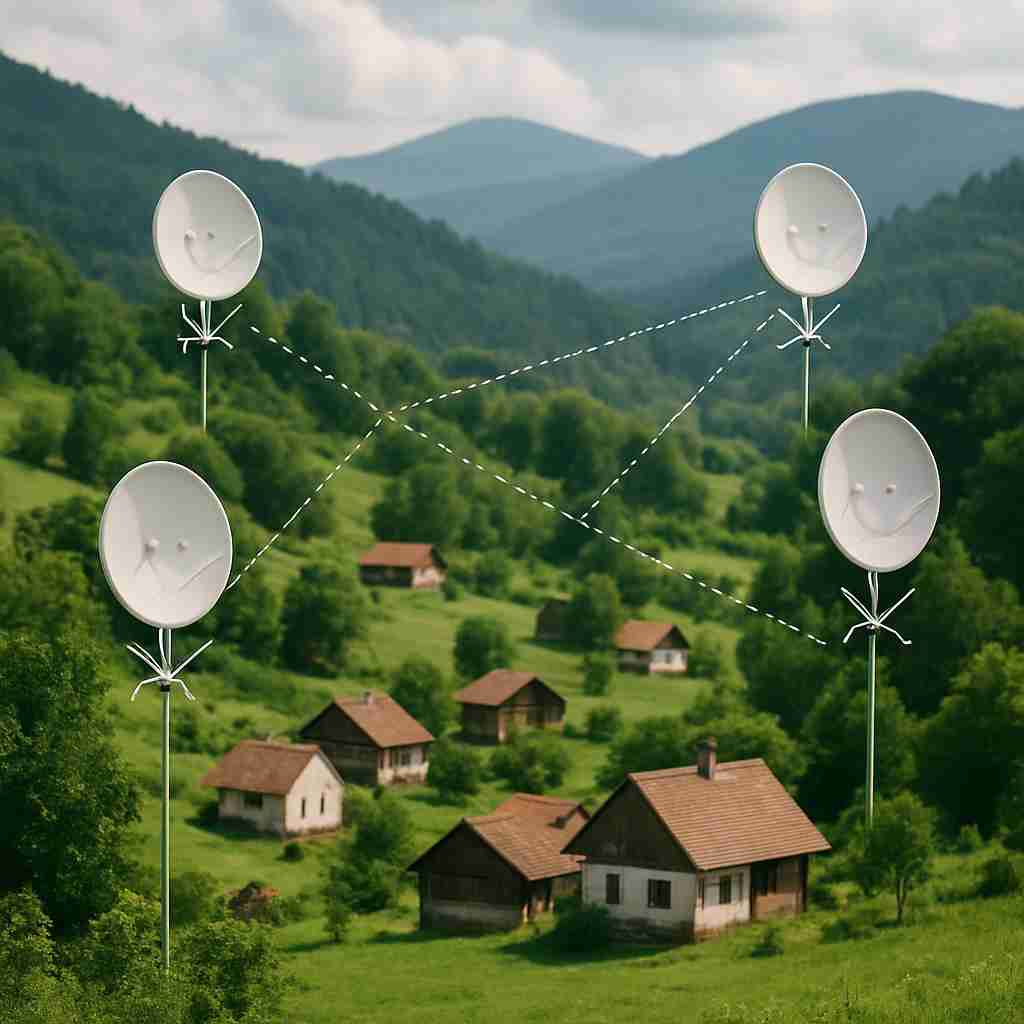
The clever architecture of these autonomous communication systems features nodes that dynamically route messages through the network, forming a resilient web of connectivity that can grow and adjust as new nodes join. This setup guarantees durability, so communication continues seamlessly even if some nodes go offline. One practical use for these networks is in secluded locations where regular communication access is scarce. For example, researchers and environmentalists utilize Off-Grid Lora meshtastic nodes to gather data and observe wildlife.
During disaster recovery efforts, these networks rapidly establish communication links, maintaining information flow when conventional systems fail. Real-life deployments include deploying Off-Grid Lora meshtastic nodes to keep critical communication channels open amid natural calamities, highlighting their vital role in sustaining connectivity exactly when it matters most.
Meshtastic: A Communication Game Changer
Meshtastic is revolutionizing long-distance communication by eliminating the need for conventional network infrastructure. At the heart of this innovation lies LoRa technology, which enables a distributed communication system that’s both resilient and decentralized. By allowing devices to communicate directly with one another, Meshtastic creates a dynamic network where every device functions as an individual node. This approach reduces reliance on central hubs, ensuring dependable connectivity even in remote locations.
Within the realm of the Internet of Things (IoT), Meshtastic stands out by delivering extended-distance wireless transmission with low power consumption—an essential feature for remote sensors and devices that only need to send occasional updates. Its peer-based communication platform also supports instantaneous interaction among devices, making it ideal for a diverse range of uses, from environmental surveillance to neighborhood communication networks.
The impact of Meshtastic is further heightened by a passionate user base committed to advancing its capabilities. Fueled by collaborative open source initiatives, the platform continuously evolves, extending its potential far beyond conventional mesh networks. Contributors actively engage in software enhancements, user interface improvements, and hardware adaptations, broadening the spectrum of scenarios where Meshtastic can be employed. This user-driven open source software project ensures that the Off-Grid Lora meshtastic node remains a vital part of creating communication solutions that operate independently of traditional infrastructure. More than just a technology, it reshapes how and where connections happen.
Decentralized Mesh Networks: The Backbone of Autonomous Communication
Distributed communication systems mark a transformative shift in how messages are exchanged, providing a robust, self-reliant framework that stands apart from conventional centralized networks. Rather than depending on singular failure points like centralized setups, these peer-based communication platforms excel through their fault-tolerant wireless networks and impressive flexibility. Every node within this architecture interacts independently with others, ensuring that a single node’s breakdown won’t bring down the entire system. This autonomy encourages a network that naturally scales and adjusts to its surroundings without heavy infrastructure demands. Their resilience is boosted by automatically redirecting data pathways, preserving communication even when portions of the network fail.
When it comes to LoRa mesh communication, these systems raise connectivity performance significantly. By supporting devices such as the Off-Grid Lora meshtastic node to work seamlessly across multiple nodes, they guarantee reliable and secure data exchange. The architecture inherently protects data confidentiality and integrity by limiting centralized data stores, which are often vulnerable to attacks. Decentralized messaging infrastructures hold firm communication lines in changing conditions, allowing dependable and continuous conversations despite external disturbances. Their capacity to uphold effective exchanges over diverse geographic features highlights their crucial role in pushing the boundaries of extended-distance wireless transmission solutions.
Advancements in Long-Range Radio Communication
Long-distance radio communication is fundamental to the LoRa mesh network advantages, especially in rural and off-grid environments. This field has seen remarkable progress, boosting both range and dependable messaging, which are crucial for autonomous communication systems. Recently, improvements in LoRa antenna advancements and signal processing techniques have greatly expanded these networks’ coverage, allowing them to operate over large regions without relying on centralized infrastructure.
Achieving a balance between low power use and extensive range is key to the success of LoRa technology. This is made possible by employing narrowband modulation technology, which enables signals to be sent across vast distances while conserving energy. Such a feature is essential in power-constrained settings, permitting devices like the Off-Grid Lora meshtastic node to run effectively.
LoRa networks’ capability to cut through obstructions and sustain reliable links even under tough conditions helps them overcome historical radio communication hurdles. As their footprint expands, these networks increasingly demonstrate their potential to transform communication in remote regions, closing divides and enhancing connectivity.
LoRa Mesh Devices: Enabling Off-Grid Solutions
In the domain of distributed communication systems, devices crafted to facilitate LoRa mesh connectivity stand out by delivering autonomous network solutions that close connectivity voids. These tools, ranging from DIY kits to refined commercial offerings, form the core of the LoRa network by boosting long-distance wireless transmission in isolated areas. When conventional networks fail, they prove essential for sustaining communication. A distinguished option here is the Off-Grid Lora meshtastic node, designed to maintain links across vast geographic regions.
Open-source LoRa hardware and software are key drivers in evolving these devices, promoting cost-effectiveness and straightforward installation. This democratization empowers both hobbyists and developers to actively shape the advancing landscape of LoRa wireless mesh communication. Consequently, this fosters an innovative atmosphere that enhances both functionality and ease of use. Recent progress in hardware emphasizes stronger signal output and improved energy efficiency, making deployment more viable in varied environments.
Importantly, the movement toward inclusive, accessible technology ensures continuous growth of these networks, effectively addressing the demands of individuals and communities seeking robust, self-sufficient communication platforms. Whether the goal is to link remote locations or reinforce backup communication strategies, these LoRa mesh networking devices remain indispensable tools for the present and future.
Conclusions
Off-grid LoRa mesh networks mark a remarkable advance in communication technology, delivering dependable and eco-friendly communication platforms especially where conventional networks fail. Communities independently achieve strong, far-field wireless communication by adopting systems such as Meshtastic and utilizing distributed communication architectures. These advancing technologies promise to reshape the standards of connectivity, meeting the demand for resilient, inclusive, and universally accessible communication worldwide.